A public service announcement is supposed to tell the public something useful. Where to get help. What deadline matters. Why the man in the advertisement needs another lingering shot of himself is a more specialized service, apparently available at the taxpayer’s expense.
Key takeaways
- Three White House ads feature Trump and carry a government-paid disclaimer.
- FactCheck.org reports at least $2.5 million in combined ad spending.
- Experts’ objections are not a court ruling that the ads are illegal.
The sponsor is you.
FactCheck.org’s September 29 analysis documents the spending and the dispute. The White House calls the spots public service announcements and cites earlier administrations. Ethics and advertising experts question that comparison and describe the messages as political.
This is an impressive customer relationship. You pay for the production, pay for the distribution, and get to watch the sponsor congratulate himself. If you dislike the message, the billing department does not offer a refund.
Uncle Sam, executive producer.
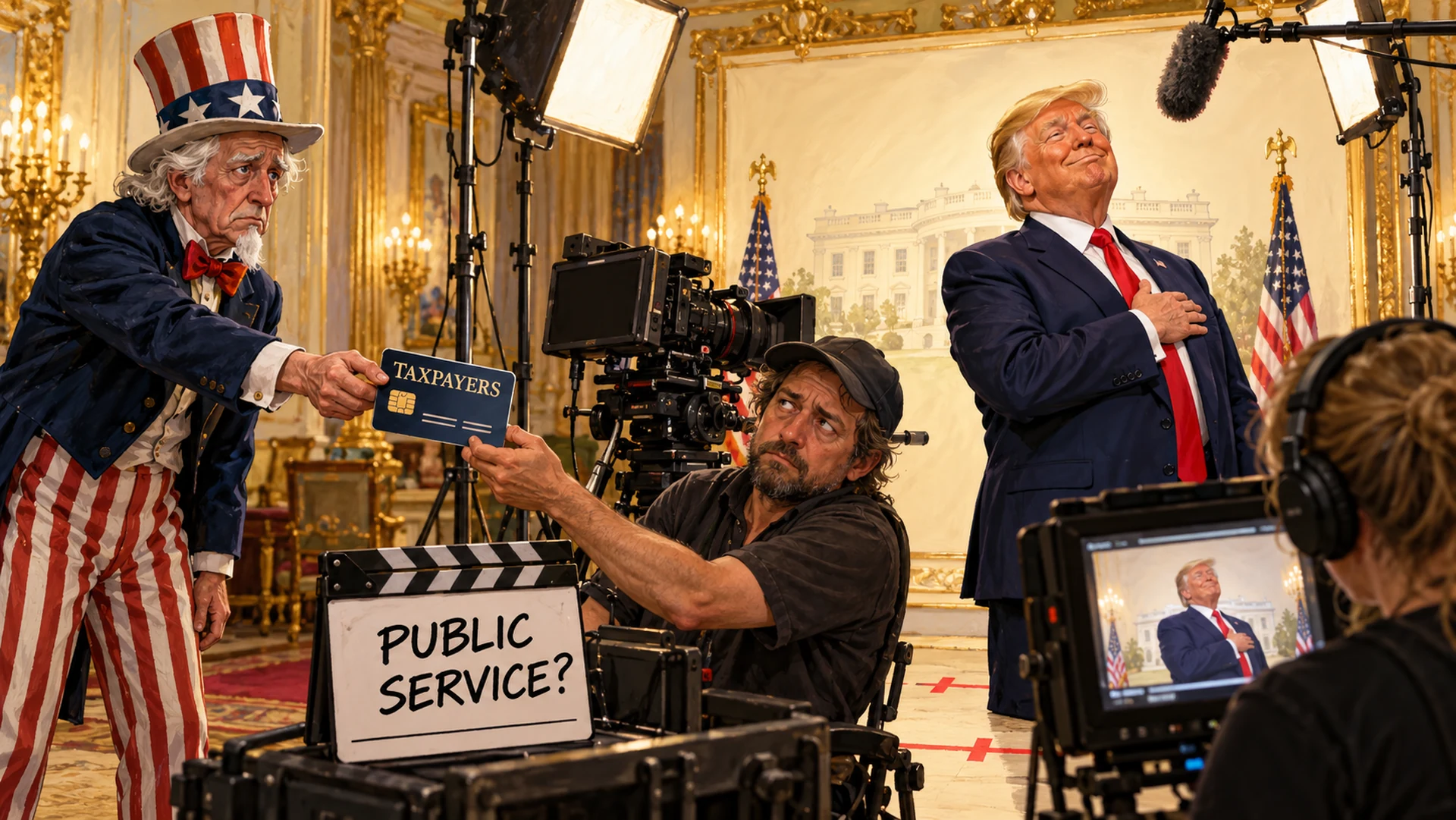
Our cartoon makes the arrangement literal: Trump poses for a camera while Uncle Sam reluctantly offers his credit card. The film set is invented. The question about who paid for the actual spots is not.
Government can explain a program without turning the president into the product. A useful announcement leaves the viewer better informed. A vanity reel leaves the viewer better acquainted with somebody’s preferred camera angle.
The next time a politician tells us government should run like a business, ask whether the business gives its owner unlimited advertising on the customers’ tab. The answer may explain an awful lot of the budget.
Today’s SI translation: Sponsored Importance. The invoice is public. The ego remains privately held.
Related: More from dontcallit.si.
Questions before the applause
How much did the ads cost?
FactCheck.org cites AdImpact’s combined figure of at least $2.5 million.
What is the White House’s defense?
It calls the spots public service announcements and compares them with past government outreach.
Has this article established illegality?
No. It describes an attributed dispute and adds an invented cartoon and editorial criticism.
Receipts
Reporting checked October 5, 2026. Later developments may change the underlying story.
Original AI-created political satire. A fictional presidential film set with Uncle Sam footing the bill. The scene and labels are invented, not documentary evidence.