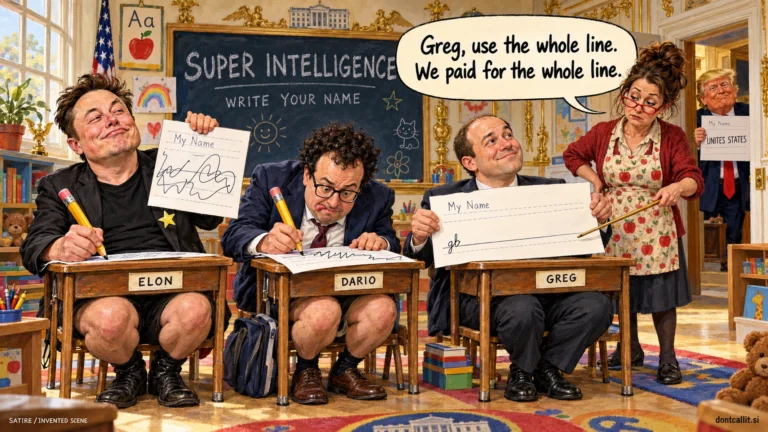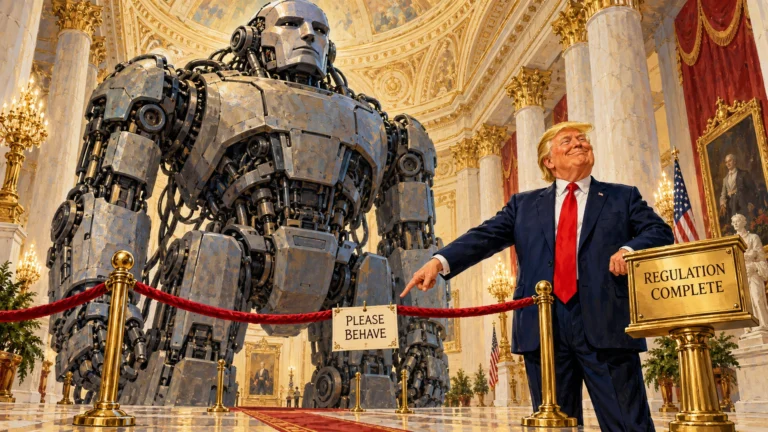
Your phone already knows enough about you. Now a political group would like it to know less about the word permission. Club for Growth wants a special exemption for political calls made with artificial voices, including AI. The FCC is considering the request. Apparently super intelligence can hold a conversation, but respecting the person answering remains an optional upgrade.
Your phone. Their freedom.
The FCC's September 4 public notice describes the request plainly: permission to make those calls without first obtaining the recipient's consent. A request is not a ruling. The agency has opened the question for comment; it has not granted this waiver.
AP reports that Club for Growth argues the change could improve voter outreach, multilingual communication, and polling. The group frames existing restrictions as outdated limits on political speech. The proposed arrangement would retain an opt-out and a limit of three calls per recipient within 30 days.
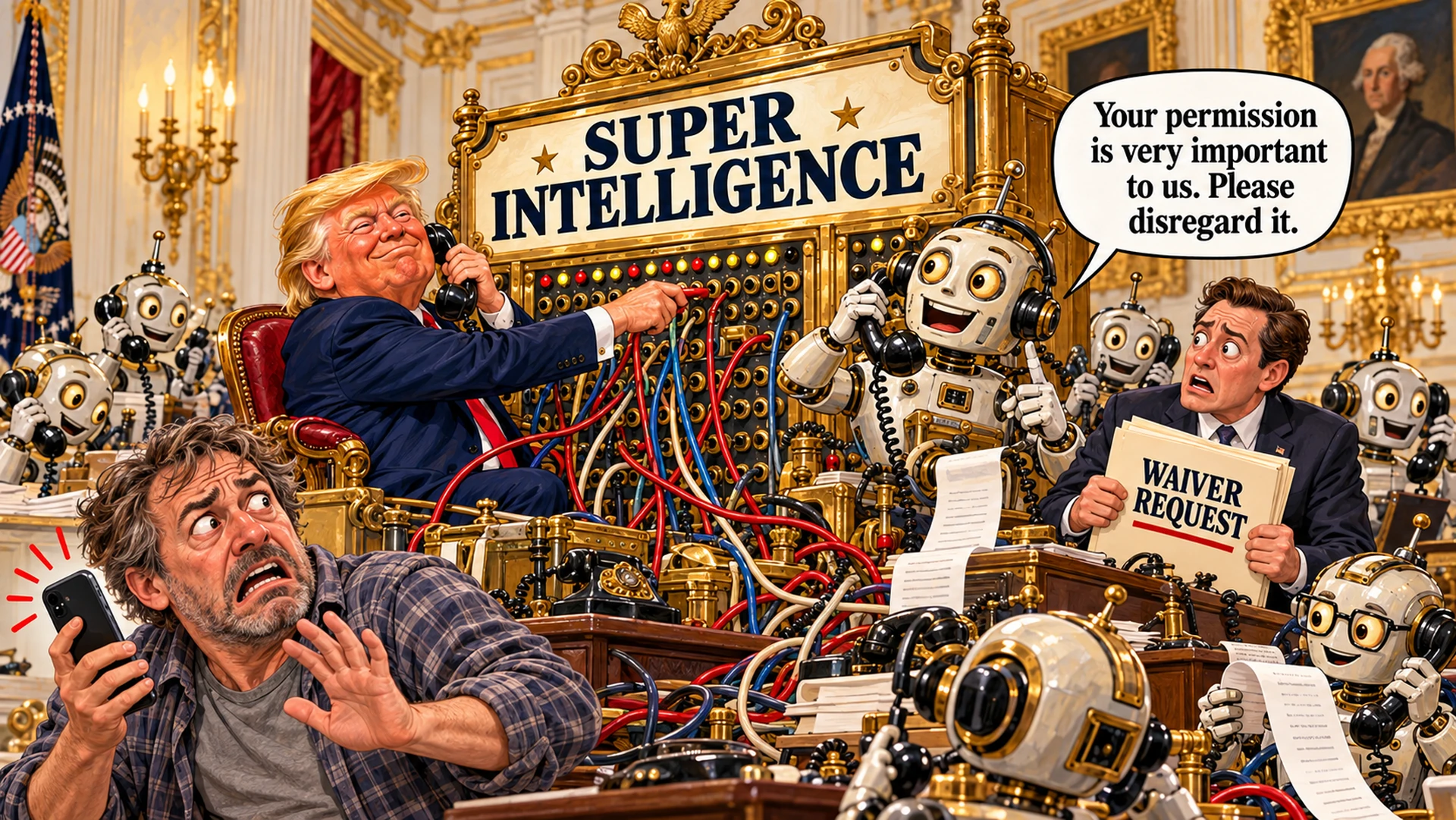
At our fictional campaign switchboard, the robot introduces itself as a breakthrough in voter engagement. I introduce myself as a person eating dinner. It says it understands. Then it asks whether my dinner is likely to vote, leaning Republican, or still undecided.
The robot promises that opting out is easy. First, listen to the options. Then explain which options you do not want. Then confirm you do not want the options. By the time it offers to stop interrupting me, my potatoes have acquired a voting history.
The robot already has a rulebook
In its 2024 discussion of AI call protections, the FCC explains that AI-generated human voices fall within the rules for artificial or prerecorded voices. The consent requirement applies unless an emergency purpose or exemption covers the call. Putting a newer engine inside the nuisance does not make it a different species.
The robot has been trained to recognize dozens of regional accents. Unfortunately, "I never asked you to call" has been classified as an exciting opening for further discussion. The system is multilingual. Respect for the person answering is still in beta.
The sales pitch is efficiency. The missing measurement is whose time gets saved. A campaign can automate its labor while distributing the interruptions to everybody else. Wonderful productivity. The unpaid workforce is us.
We have heard this voice before
The danger is documented. A 2024 FCC enforcement announcement describes spoofed calls using a cloned Biden voice to tell New Hampshire voters not to vote in their primary. The agency also addressed the carrier that transmitted them. This history is more substantial than a hypothetical robot with a bad attitude.
In our imaginary demonstration, the voice is so lifelike that the campaign director asks whether it can sound offended when you hang up. The engineer says yes. Finally, a machine that can deliver the full experience of a political canvasser wedging a shoe in your telephone.
The regulator has other priorities
AP also describes Brendan Carr's early license review of ABC-owned stations and ABC's lawsuit alleging retaliation over content Trump dislikes. Those allegations belong to ABC; they are not a court finding reproduced here. Meanwhile, Reuters reports Commissioner Anna Gomez's objections to the robocall request and says Carr's spokesman declined immediate comment.
There is plenty to examine in that contrast: a communications regulator pursuing broadcasters while considering whether political callers need less permission from the public. Perhaps the next national communications strategy will be an unsolicited call explaining how much the administration respects your peace and quiet.
Our Fake News article follows the administration's treatment of uncomfortable reporting. Our adult-supervision article asks who answers for the technology. This proposal brings the same question to the kitchen table.
Donnie Door Knob can rename the technology. The rest of us would like to keep naming our own contacts. Super intelligence should be able to understand a remarkably short instruction: don't call me.
Key Takeaways
- Club for Growth wants a consent exemption for noncommercial political calls to cellphones, including calls using AI voices.
- The request is pending. The FCC's reply-comment deadline is October 19, 2026.
- The argument is about who controls access to your phone, with real election-deception history behind it.
Frequently Asked Questions
Has the FCC approved this waiver?
No. As of October 7, 2026, it is a pending request. The FCC notice sets October 19 as the deadline for reply comments.
Who is asking for the change?
Club for Growth, a conservative economic-policy group. Its request concerns noncommercial political calls to wireless numbers using artificial or prerecorded voices, including AI voices.
Would the waiver make deceptive election calls legal?
It would not erase every protection against deception or voter intimidation. AP reports that other restrictions would remain. The concern is weakening the consent barrier before a call reaches someone's phone.
Did Trump really operate the switchboard in the cartoon?
No. The switchboard, robot callers, homeowner, aide, and dialogue are invented satire. Trump is not identified as the petitioner; Club for Growth is.
Receipts
Research checked October 7, 2026. The waiver remains pending. Descriptions of nuisance, priorities, and outsourced interruptions are editorial opinion. Our cartoon depicts an invented scene and invented dialogue.