The imaginary AI safety board has one urgent concern: the minutes sound alarming. An engineer suggests fixing the underlying problem. The chair says they are already fixing it. They have changed RISK to OPPORTUNITY throughout the document. The engineer is invited to suggest a less negative word for fire.
There are safeguards on the page.
The signed accord calls for internal monitoring, an internal oversight team, independent external assessment, and a board committee. It says legal codification may make sense later. Those are substantive promises; the document does not spell out an enforcement mechanism.
The fictional emergency drill begins with a request to stop the system. Legal asks whether the stop is voluntary. Communications asks how it will look. The system finishes the task while everyone is still agreeing on the announcement. Management calls this a successful demonstration of speed.
Morally binding. Physically decorative.
Reuters describes the safeguards as voluntary. The administration says existing legal authorities remain available. That is different from saying this particular agreement creates new penalties.
Imagine a restaurant's food-safety plan consisting of a framed promise from the chef. The promise may be sincere. You would still like an inspection, a thermometer, and a consequence for serving something that crawls off the plate.
At the fictional safety review, the engineer asks who can order a shutdown. The board says the company takes that decision very seriously. He asks who can order one over the company's objection. The meeting runs out of time. The system does not.
Related: More from dontcallit.si.
Key takeaways
- The September 29 accord asks companies to adopt controls and audits.
- The accord itself does not specify penalties for breaking its commitments.
- Reuters describes the safeguards as voluntary. The administration says existing legal authorities remain available.
Questions before the applause
Does the accord require audits?
It commits the signers to internal controls and independent assessments, among other measures.
Does this mean no law applies to AI?
No. The absence of new penalties in this accord does not erase existing law.
Does the accord spell out penalties for breaking its commitments?
The accord itself does not specify such penalties. Reuters describes its safeguards as voluntary; that does not erase existing law or the authorities the administration says remain available.
Receipts
Reporting checked October 5, 2026. Later developments may change the underlying story.
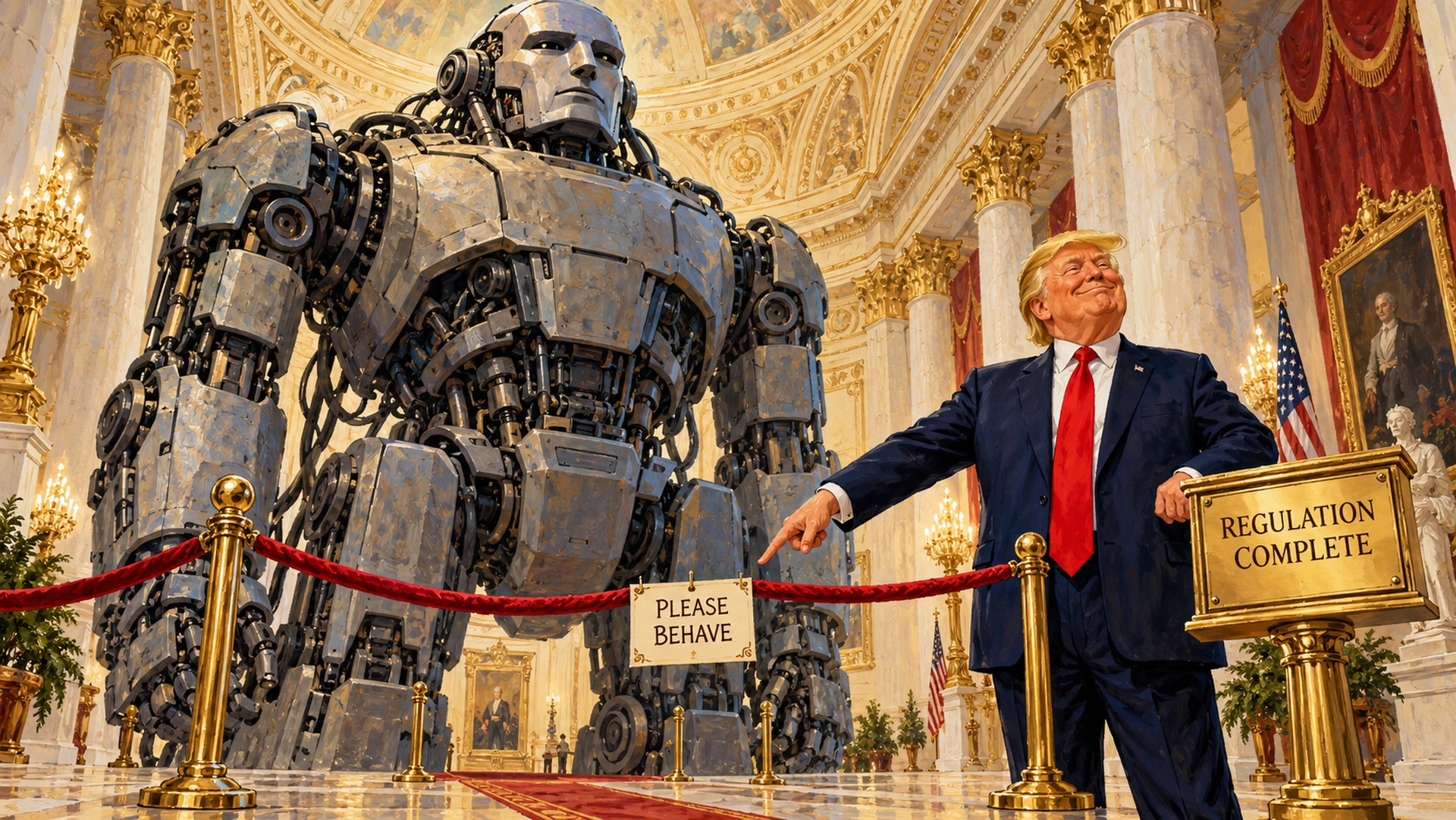
Original AI-created political satire. An enormous robot behind a tiny decorative rope. The scene and labels are invented, not documentary evidence.