
Vladimir Putin invades Ukraine, keeps attacking its energy system, and gets Donald Trump worrying about the damage to Russian oil. Apparently, the real threat to peace is a country refusing to lie still while the man invading it checks his profit margin. Donald has finally found a war policy he can explain: the customer in Moscow is always right.
Three Key Takeaways
- Ukraine launched a major drone attack overnight into October 18, despite Trump's demand that it stop striking Russian energy infrastructure.
- A ceasefire needs reciprocal restraint and enforcement. Waiving new sanctions while Russia keeps attacking gives Moscow relief before it delivers results.
- Russian data-center outages are documented. Claims that those strikes silenced MAGA bots are not supported by the available account-activity analysis; separate evidence of Russian election influence operations is real.
The invaded country is being very difficult
CNN reported that Ukraine hit the St. Petersburg Oil Terminal in one of its biggest drone attacks this year. Russia's defense ministry claimed it intercepted 1,015 drones overnight. That is a Russian claim, not an independently verified count of launches or successful interceptions.
Trump had called Ukraine's attacks on Russian refineries a "disgrace." CNN also reported that Russia continued striking Ukrainian energy plants and cities after his announced energy ceasefire. According to local authorities cited in the report, the attacks in Russia killed one person and wounded five. These are consequential strikes with human costs, not a video-game score.
But Donald's indignation appears to have a rather specific forwarding address. Russian energy infrastructure attracts concern. Ukraine's resistance attracts a lecture. The man who promised strength seems to have confused foreign policy with managing Vladimir's blood pressure.
Imagine telling an invaded country that defending itself is making the negotiations awkward. Yes, Donald. That is often how resistance works. If everyone simply accepts the invasion, the meeting is much easier to schedule. The paperwork even fits on one page: surrender here, initial beside the stolen territory, and please rate your mediator.
A ceasefire is supposed to contain some cease
An actual agreement to stop attacking energy infrastructure could protect people and reduce destruction. The necessary ingredient is that both sides follow it. It is not enough to announce peace, wait for the applause, and leave the invaded country to discover whether the agreement includes electricity.
In his October 12 address to the Warsaw Security Forum, Zelenskyy said Ukraine was ready to respect an energy ceasefire if Russia did the same. He described continued Russian strikes after Trump's announcement and called for American pressure to make the arrangement work.
That is the central test: what does Russia have to do, how is compliance checked, and what happens if it continues attacking? Those questions should come before the victory lap. In Donald's version of diplomacy, the lap appears to be the entire track.
If Ukraine is expected to give up a means of applying pressure while Russia keeps using its own, that is an unequal bargain. It reduces the defender's options while leaving the aggressor's calculations intact. Calling it peace does not change the incentives any more than writing "SALAD" on a cheeseburger changes lunch.
Putin receives the advance. America waits for the deliverables.
The October 16 executive order waives major new sanctions and tariffs under the Graham Act, while preserving earlier executive-order sanctions. The law permits waivers. The order gives these waivers no fixed expiration date.
Our America First. Putin Exempt. article covers the escape hatch. The deeper problem is the sequence. Moscow receives relief; everyone else waits to see what Moscow will provide in return. A negotiation normally involves an exchange. This one keeps looking like a loyalty program with a heavily armed preferred customer.
The administration's concern about energy prices deserves scrutiny, too. Reuters reported that Rubio cited the potential consequences for the U.S. and global economies, including countries buying Russian energy. High fuel prices are a real problem. So is rewarding a government whose war helps create instability.
Cheap fuel today is not a complete strategy if the arrangement helps sustain the war you say you want to end. The administration needs to explain the benefit, the cost, the conditions, and the consequences for noncompliance. "Vladimir was very nice on the phone" belongs in a Christmas letter, not a national-security assessment.
Donald advertises himself as a master negotiator. At some point, somebody should ask why the other man keeps leaving with the merchandise while America is still discussing the financing.
Europe has located the obvious part
This is not a case of literally every country agreeing. It is a case of key European partners stating a coherent objective: strengthen Ukraine and increase pressure on Russia to obtain a real ceasefire.
At an October 16 meeting with Zelenskyy, European Council President Antonio Costa said, "Now it's time to increase our support, to increase our pressure." The discussion included air defense, energy protection, and Ukraine's financial resilience.
That approach connects the assistance to the goal. Protect the country being attacked. Make continuing the war more costly for the country attacking it. Seek an agreement that can be enforced. Nobody has to embroider that on a red hat to understand it.
The Republican Party spent decades selling itself as the party that understood the Kremlin. Now its most powerful figure seems offended when the Kremlin's victim interferes with business. Somewhere, a Cold War campaign poster is asking to be taken down before this gets any more embarrassing.
The data centers went down. The bot story needs receipts.
There is another Russian export worth discussing: manufactured political outrage. And there is a particularly satisfying story circulating about Ukrainian strikes taking it offline.
The fantasy is irresistible. A Russian server room goes dark, and America's loudest online patriots suddenly discover the restorative benefits of logging off. The eagle in the profile picture develops a maintenance problem. A thousand identical arguments are unavailable while somebody finds an extension cord.
But that punchline is not a finding. Graphika examined the Yandex strikes and the viral claims. Its analysis found no unusual collapse in the MAGA, AfD, or Reform UK communities being described as silenced. The Cloudflare chart at the center of the story mainly measured automated requests from Yandex's search crawler, not political accounts posting on social media.
A search crawler indexes websites. A propaganda account tries to index your opinions. Giving both the name "bot" does not make them the same machine.
Zelenskyy did claim that social platforms became less hostile after the strikes. That claim is part of the public record; it does not override the limits of the measurements. The outages show damaged infrastructure and disrupted services. They do not establish that Republican messaging disappeared with it.
The better-supported story is serious enough. In a September 21 investigation, Graphika identified a Russia-aligned operation spreading fabricated media and unverified allegations against Democratic candidates ahead of the U.S. midterms. Some material impersonated news organizations or misused celebrity footage. That is evidence of an influence campaign, not evidence that this month's strikes switched it off.
An American flag in a profile picture is not a certificate of origin. But neither is every Republican a Russian bot. Plenty of domestic bullshit is manufactured locally, using entirely American labor.
The aggressor keeps getting customer service
The central absurdity survives every necessary fact check. Russia invaded Ukraine. Ukraine wants to preserve its country. Trump is easing new economic pressure on Russia while condemning Ukrainian attacks on Russian oil. The burden keeps landing on the party trying to survive the invasion.
The question for the White House is simple: what has Putin actually delivered that justifies the benefit? Not a compliment, a reassuring conversation, or Donald's latest impression of how serious everybody looked. A result. Something observable that leaves Ukraine safer.
And the question for Republican lawmakers is whether their objections have any function beyond proving that they noticed. If the policy is damaging American interests, use oversight to test it. Demand the terms, the assessments, and the enforcement plan. A concerned statement is a beginning; it is not a substitute for doing the job.
Ukraine does not need a mediator who regards its survival as an inconvenience to Vladimir's customer experience. America does not need another promise that the next concession will be the one that finally works.
Putin started the invasion. Donald would like Ukraine to keep the noise down.
Questions worth asking
Was the 1,015-drone figure independently verified?
No. CNN attributed that interception claim to Russia's defense ministry. It should not be presented as an independently established count.
Did Trump waive every sanction on Russia?
No. The October 16 order waives major measures under the new Graham Act and expressly preserves earlier executive-order sanctions.
Did Ukraine's data-center strikes prove that MAGA bots disappeared?
No. Graphika found no unusual collapse in the Western political communities named in the viral claims. The widely shared crawler-traffic chart does not measure social-media accounts.
Is there separate evidence of Russian election influence activity?
Yes. Graphika's September investigation documented a Russia-aligned operation targeting U.S. midterm candidates with manipulated media and unverified allegations. That is a different finding from the unproved claim about the outages silencing bots.
Receipts
- CNN: Ukraine's October 18 drone attack, Trump's criticism, and continuing Russian strikes.
- Ukrainian presidency: Zelenskyy's October 12 address on reciprocal restraint and the data-center claims.
- White House: October 16 Graham Act waivers.
- Reuters: Rubio's explanation of the review and economic concerns.
- Ukrainian presidency: October 16 meeting with European leaders.
- Graphika: what the Yandex outage data does and does not establish.
- Graphika: Russia-aligned influence operation targeting midterm candidates.
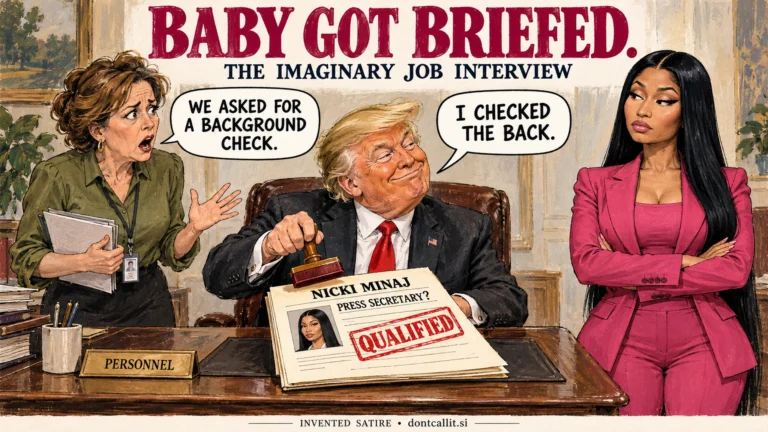
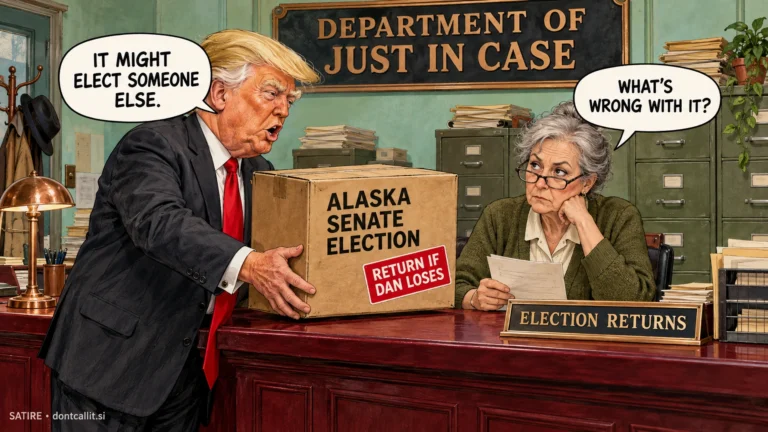
Political satire and opinion. The accompanying cartoon depicts an invented scene and dialogue. No claim is made that the pictured meeting occurred.